

Introduction
Senior executives spend years building reputations inside boardrooms, corner offices, investor meetings, and strategy discussions. But today, reputation no longer lives only in private professional circles. It lives online.
And that changes everything.
Imagine this scenario for a moment. An NRC member, executive recruiter, founder, investor, or board chair hears your name during a board discussion tonight. Before they ever ask for your CV, they open Google.
What appears?
A strong governance identity? Thought leadership? Strategic insight? A visible executive presence?
Or almost nothing?
That single search result page has quietly become one of the most influential gateways to modern board opportunities. In many cases, your Boardroom digital footprint now creates the first impression long before any formal conversation begins.
This is exactly why senior leaders can no longer treat online visibility as optional.
The board ecosystem has evolved. Boards are dealing with AI disruption, ESG pressure, cybersecurity risk, stakeholder scrutiny, digital transformation, and governance complexity at levels never seen before. As a result, nomination committees increasingly look for directors who appear visible, informed, credible, and strategically engaged with the future.
A traditional board CV may explain where you worked. But your digital footprint reveals how relevant you appear today.
That distinction matters far more than many executives realize.
Table of Contents
- What Is a Boardroom Digital Footprint?
- Why Online Visibility Matters for Directors
- The Shift From Resume-Based Selection to Reputation-Based Selection
- What Happens When Recruiters Google You?
- The Difference Between Visibility and Vanity
- How NRCs Evaluate Directors Today
- Key Components of a Strong Boardroom Digital Footprint
- Why LinkedIn Has Become a Boardroom Discovery Tool
- The Hidden Risks of Digital Silence
- Thought Leadership and Governance Credibility
- Personal Branding vs Board-Level Positioning
- Common Mistakes Senior Executives Make
- How to Build a Future-Ready Executive Presence
- Why Consistency Across Platforms Matters
- Final Thoughts for Aspiring Board Directors
What Is a Boardroom Digital Footprint?
A Boardroom digital footprint refers to the collection of professional signals that exist about you online. It includes every public-facing touchpoint that contributes to your professional reputation and executive credibility.
Your Digital Presence Is Already Speaking for You
Many executives believe they do not have a digital footprint because they rarely post online. In reality, everyone has one.
Your footprint may include:
- LinkedIn profiles
- Executive bios
- Conference participation
- Published interviews
- Podcast appearances
- Industry mentions
- Articles and thought leadership
- Company leadership pages
- Panel discussions
- Media coverage
The real question is not whether you have a digital presence.
The real question is whether that presence strengthens or weakens your board positioning.
Why This Matters More Than Ever
Ten years ago, many board appointments happened quietly through networks and referrals. While relationships still matter, modern governance searches are increasingly research-driven.
Today, executive recruiters and NRCs often evaluate digital visibility before requesting a conversation.
That means your online presence has become part of your executive identity.
Why Online Visibility Matters for Directors
Board opportunities are fundamentally built on trust.
And trust starts forming long before meetings happen.
First Impressions Now Happen on Search Engines
When decision-makers search your name, they begin forming immediate assumptions:
- Is this leader visible?
- Do they appear current?
- Are they engaged with modern governance discussions?
- Do they demonstrate strategic thinking?
- Are they recognized in their industry?
That first impression can influence whether opportunities move forward.
Visibility Builds Familiarity
Human psychology naturally trusts what feels familiar.
Executives who consistently appear in relevant business conversations tend to create stronger professional recall. This does not mean becoming a social media personality. It means creating thoughtful visibility in the right professional spaces.
That distinction is important.
The Shift From Resume-Based Selection to Reputation-Based Selection
The board recruitment landscape has changed dramatically.
A strong CV is still important. But it is no longer enough on its own.
Modern Boards Evaluate More Than Experience
Boards now look beyond operational achievements. They evaluate:
- Governance maturity
- Strategic awareness
- Industry relevance
- Public credibility
- Leadership perspective
- Digital visibility
This creates a major difference between executives who merely possess experience and executives who strategically position that experience.
Board CV vs Boardroom Presence
| Traditional Board CV | Boardroom Digital Footprint |
| Focuses on history | Reflects current relevance |
| Lists achievements | Shows thought leadership |
| Static document | Dynamic professional identity |
| Shared privately | Visible publicly |
| Operational narrative | Governance narrative |
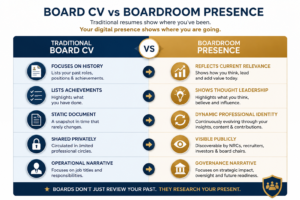
That is exactly why executive positioning has become increasingly important for aspiring directors.
What Happens When Recruiters Google You?
This is the question many executives avoid asking themselves honestly.
Search Results Shape Perception Quickly
Within seconds, recruiters may assess:
- Your LinkedIn quality
- Professional consistency
- Industry authority
- Thought leadership
- Governance visibility
- Relevance to modern business challenges
A weak or outdated online presence can unintentionally create doubt.
Digital Due Diligence Is Becoming Standard
Executive recruiters increasingly perform online research before reaching out to candidates. Publications like Harvard Business Review discuss how executive visibility influences leadership credibility in modern organizations.
This trend is accelerating because boards want directors who appear informed and future-ready.
The Difference Between Visibility and Vanity
A lot of executives hesitate to build visibility because they associate it with self-promotion.
That misunderstanding holds many capable leaders back.
Strategic Visibility Is Not About Attention
Board-level visibility is not about posting motivational content every day. It is about demonstrating perspective, clarity, and strategic understanding.
Professional visibility might include:
- Sharing governance insights
- Publishing industry observations
- Speaking at leadership forums
- Participating in board discussions
- Writing thoughtful articles
The goal is credibility, not popularity.
Quiet Expertise Often Stays Invisible
Many highly experienced executives remain overlooked simply because nobody outside their immediate network can clearly see their expertise.
Visibility creates accessibility.
And accessibility creates opportunity.
How NRCs Evaluate Directors Today
Nomination and Remuneration Committees have evolved significantly in recent years.
Governance Complexity Has Increased
Boards now face challenges involving:
- AI governance
- Cybersecurity
- ESG accountability
- Regulatory risk
- Digital transformation
- Stakeholder pressure
As a result, committees increasingly seek directors who appear actively engaged with these realities.
What NRCs Often Evaluate Online
| Evaluation Area | What It Signals |
| LinkedIn Presence | Executive credibility |
| Published Insights | Strategic thinking |
| Media Visibility | Industry authority |
| Speaking Engagements | Communication ability |
| Governance Content | Board readiness |
Modern board recruitment is no longer purely resume-driven.
It is reputation-driven.
Key Components of a Strong Boardroom Digital Footprint
Strong executive visibility does not happen accidentally.
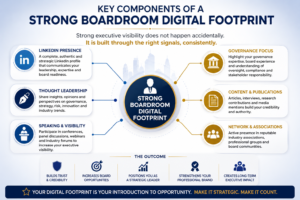
It is usually built intentionally over time.
Governance-Oriented LinkedIn Profile
Your LinkedIn profile should reflect governance positioning rather than purely operational leadership.
Thought Leadership
Publishing insights demonstrates perspective and strategic awareness.
Consistent Executive Narrative
Your professional story should remain aligned across platforms.
Industry Visibility
Participating in executive ecosystems strengthens credibility.
Professional Board Positioning
Specialized positioning platforms like Your Board Profile help executives build stronger governance-oriented professional identities.
Why LinkedIn Has Become a Boardroom Discovery Tool
LinkedIn has become one of the most powerful executive discovery platforms globally.
Search Firms Regularly Use LinkedIn
Executive recruiters use LinkedIn to:
- Discover industry experts
- Validate leadership credibility
- Assess governance positioning
- Evaluate professional consistency
Ignoring LinkedIn today is similar to ignoring your executive introduction page.
What a Strong Executive LinkedIn Profile Includes
A board-focused profile should contain:
- Governance-oriented headline
- Strategic executive summary
- Board competencies
- Industry expertise
- Thought leadership activity
- Featured publications or interviews
Executives who treat LinkedIn like a passive resume often miss major visibility opportunities.
The Hidden Risks of Digital Silence
Some executives believe staying invisible online protects professionalism.
Ironically, it often does the opposite.
Digital Silence Can Create Doubt
When nothing substantial appears online, recruiters may wonder:
- Is this executive current?
- Are they engaged with industry evolution?
- Do they participate in governance discussions?
- Are they visible beyond internal corporate environments?
Silence can unintentionally weaken perception.
Visibility Does Not Require Constant Posting
Strategic visibility is about quality, not volume.
A few thoughtful contributions can often create stronger positioning than constant generic activity.
Thought Leadership and Governance Credibility
Thought leadership has become one of the strongest credibility signals in executive positioning.
Why Thought Leadership Matters
Executives who consistently share meaningful insights become associated with expertise.
That association influences:
- Search visibility
- Professional authority
- Board credibility
- Industry recognition
Topics That Strengthen Board Positioning
Relevant themes include:
- ESG governance
- Cybersecurity oversight
- AI ethics
- Leadership transitions
- Digital transformation
- Risk management
Publications like McKinsey & Company Insights and Deloitte Insights regularly highlight how board expectations are evolving rapidly.
Personal Branding vs Board-Level Positioning
There is a major difference between general personal branding and boardroom positioning.
Personal Branding Is Broad
It often focuses on:
- Personality
- Career progression
- Visibility growth
- General networking
Board-Level Branding Is Strategic
It focuses on:
- Governance credibility
- Strategic oversight
- Leadership maturity
- Industry relevance
- Board readiness
That difference matters enormously in executive positioning.
Common Mistakes Senior Executives Make
Even highly accomplished leaders often weaken their visibility unintentionally.
Most Common Executive Branding Mistakes
| Mistake | Impact |
| Outdated LinkedIn profile | Weak discoverability |
| No visible thought leadership | Reduced authority |
| Inconsistent professional messaging | Lower trust |
| Operational-only positioning | Weak governance identity |
| Minimal digital visibility | Limited opportunities |
Most of these issues are fixable with intentional positioning.
How to Build a Future-Ready Executive Presence
Modern boardrooms increasingly prioritize future-focused leadership.
Future-Ready Directors Demonstrate
- Strategic adaptability
- Continuous learning
- Digital awareness
- Governance understanding
- Industry engagement
Practical Steps to Strengthen Your Presence
- Optimize your LinkedIn profile
- Publish governance-focused insights
- Participate in executive forums
- Build consistent professional messaging
- Create a strategic board profile
- Engage thoughtfully in industry discussions
Professional positioning support from Your Board Profile can help executives align their visibility more effectively with board opportunities.
Why Consistency Across Platforms Matters
Strong executive brands feel aligned everywhere.
Inconsistency Weakens Trust
Imagine finding:
- Different career narratives across platforms
- Outdated executive bios
- Contradictory positioning
- Missing governance focus
That inconsistency weakens credibility immediately.
Consistency Creates Confidence
Alignment across:
- Executive bios
- Board profiles
- Articles
- Public appearances
…helps reinforce professionalism and trust.
Conclusion
If an NRC Googles your name tonight, what story will your digital footprint tell?
That question has become increasingly important in modern board recruitment.
Today’s board opportunities are shaped not only by experience but also by visibility, relevance, credibility, and strategic positioning. A strong Boardroom digital footprint helps executives communicate board readiness long before formal conversations begin.
The leaders who succeed in tomorrow’s governance ecosystem will not simply be experienced. They will also be discoverable, visible, and strategically positioned.
Your executive reputation no longer lives only in board meetings or inside a CV.
It lives online.
And increasingly, that is where modern board opportunities begin.
Ready to Strengthen Your Board Presence?
If you are preparing for independent director opportunities or board-level leadership roles, now is the time to build a stronger governance-focused executive identity.
Explore professional board positioning solutions at Your Board Profile and strengthen your visibility where modern board opportunities actually happen.
FAQs
- What is a boardroom digital footprint?
A boardroom digital footprint refers to the professional online presence and visibility of an executive across platforms, publications, and digital channels.
- Why is boardroom digital footprint important for directors?
It helps executive recruiters and board committees evaluate credibility, visibility, and governance readiness.
- Do executive recruiters really Google directors?
Yes. Recruiters frequently conduct online research before approaching or evaluating board candidates.
- What platforms influence executive visibility the most?
LinkedIn, company websites, business publications, podcasts, and media mentions all influence executive visibility.
- How does LinkedIn help with board opportunities?
LinkedIn improves discoverability, professional credibility, and strategic positioning for directors.
- What should a board-focused LinkedIn profile include?
It should include governance competencies, strategic leadership positioning, thought leadership, and industry expertise.
- Is thought leadership necessary for directors?
Thought leadership helps executives demonstrate perspective, strategic thinking, and governance understanding.
- What are common executive branding mistakes?
Outdated profiles, weak digital presence, inconsistent messaging, and operational-only branding are common mistakes.
- Can executives build visibility without becoming influencers?
Yes. Strategic visibility focuses on professional credibility, not social media popularity.
- What industries value future-ready directors most?
Industries dealing with AI, ESG, cybersecurity, digital transformation, and regulatory complexity highly value modern governance expertise.
- How often should executives update their digital profiles?
Profiles should be reviewed regularly to ensure relevance, accuracy, and consistency.
- Why does consistency across platforms matter?
Consistency strengthens trust, professionalism, and executive credibility.
- Why is a Boardroom Digital Footprint important?
A Boardroom Digital Footprint improves executive visibility, credibility, and boardroom trust.
- How do recruiters evaluate a Boardroom Digital Footprint?
Recruiters evaluate a Boardroom Digital Footprint through online presence, leadership content, and professional credibility.
- How can executives strengthen their boardroom digital footprint?
Executives can improve visibility through optimized profiles, thought leadership, governance participation, and strategic executive positioning.