
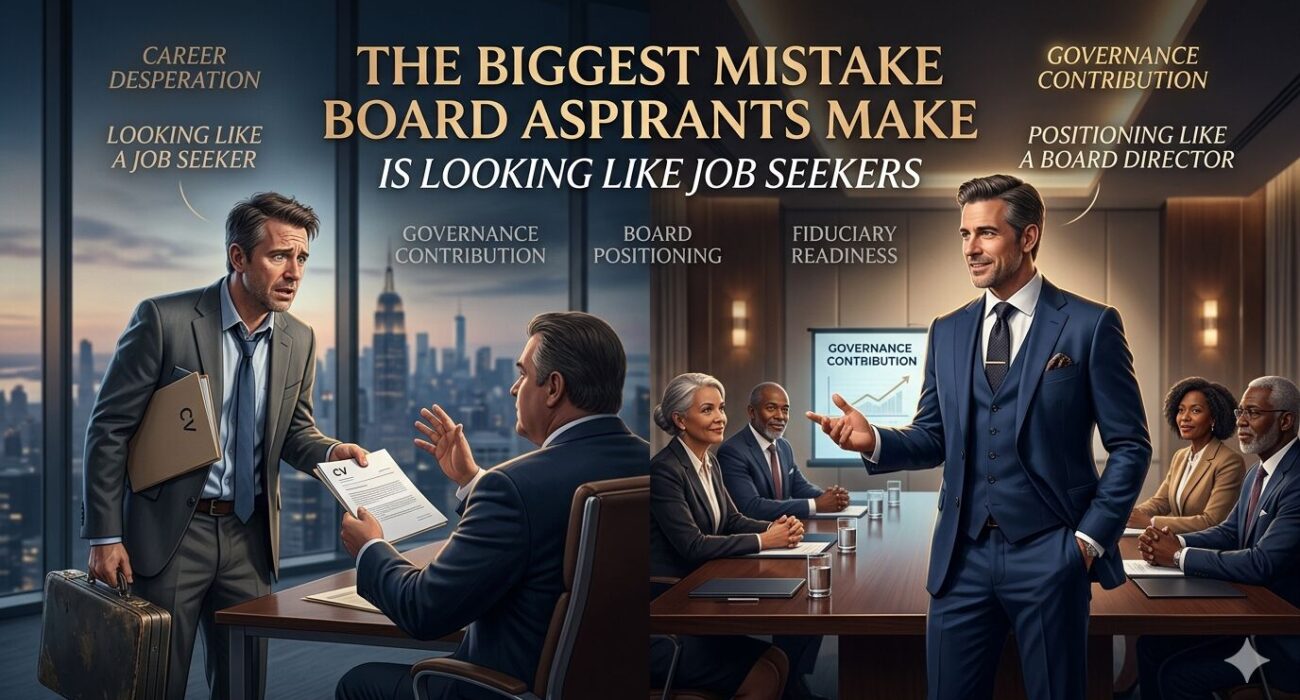
Many accomplished executives spend decades building successful careers, leading teams, driving growth, and delivering results. Yet when they decide to pursue board opportunities, they unknowingly make a mistake that undermines their credibility before the conversation even begins.
They position themselves like job seekers.
This mistake is surprisingly common among board aspirants. Instead of presenting themselves as governance contributors, strategic advisors, and fiduciary stewards, they showcase themselves as executives looking for their next role. The difference may appear subtle on the surface, but in the boardroom, it changes everything.
Boards do not recruit employees. They appoint individuals who can strengthen governance, provide oversight, challenge assumptions, and contribute independent judgment. When aspiring directors communicate desperation, career transition narratives, or operational achievements without governance context, they unintentionally signal that they do not yet understand the board’s purpose.
The modern boardroom demands a different kind of positioning. It requires fiduciary readiness, strategic perspective, governance credibility, and the ability to contribute beyond management responsibilities.
This article explores why many board aspirants struggle to secure board opportunities, how board positioning differs from executive positioning, and what aspiring directors can do to become genuinely board-ready.
Table of Contents
- Why Most Board Aspirants Get It Wrong
- The Difference Between a Job Seeker and a Board Candidate
- Understanding Governance Contribution
- Why Boards Are Not Looking for Another Executive
- How Board Aspirants Are Evaluated for Board Positions
- Signs You Are Positioning Yourself Incorrectly
- Building Effective Board Positioning
- Demonstrating Fiduciary Readiness
- The Language of Governance Leadership
- Board Branding vs Career Branding
- Practical Steps to Reposition Yourself
- Conclusion
- FAQs
Why Most Board Aspirants Get It Wrong
The challenge begins when executives assume that board opportunities follow the same rules as executive hiring. Throughout their careers, professionals have been rewarded for discussing achievements, operational leadership, team management, revenue growth, and execution capabilities.
Those accomplishments matter. However, boards evaluate candidates through a different lens.
A board is not responsible for managing daily operations. Instead, it oversees strategy, governance, risk management, compliance, succession planning, stakeholder interests, and long-term sustainability. When board aspirants continue communicating solely through an executive lens, they create a disconnect between what they offer and what boards actually need.
Many profiles read like executive resumes. They highlight revenue figures, departmental leadership, transformation projects, and operational milestones. While impressive, these achievements do not automatically demonstrate governance competence.
The issue is not capability. The issue is positioning.
The Difference Between a Job Seeker and a Board Candidate
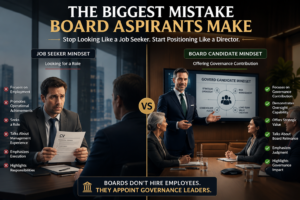
Understanding this distinction is essential for successful board positioning.
| Job Seeker Mindset | Board Candidate Mindset |
| Focuses on employment | Focuses on governance contribution |
| Promotes operational achievements | Demonstrates oversight capability |
| Seeks a role | Offers strategic value |
| Talks about management experience | Talks about board relevance |
| Emphasizes execution | Emphasizes judgment |
| Highlights responsibilities | Highlights governance impact |
A job seeker asks, “What role can I get?”
A board candidate asks, “How can I strengthen governance and create value for shareholders and stakeholders?”
This shift transforms how decision-makers perceive you.
Understanding Governance Contribution
What Governance Contribution Really Means
One of the most misunderstood concepts among board aspirants is governance contribution.
Governance contribution is not about performing management functions. It is about influencing organizational outcomes through oversight, accountability, strategic guidance, and independent judgment.
Board members contribute by:
- Challenging strategic assumptions
- Monitoring risk exposure
- Supporting succession planning
- Enhancing governance standards
- Protecting stakeholder interests
- Ensuring regulatory compliance
A board candidate must demonstrate an understanding of these responsibilities.
Effective governance is built on globally recognized standards, and the OECD Principles of Corporate Governance provide valuable guidance on accountability, transparency, and stakeholder stewardship.
Why Boards Value Governance Thinkers
Boards are increasingly operating in complex environments characterized by regulatory scrutiny, technological disruption, geopolitical uncertainty, cybersecurity risks, and stakeholder expectations.
As a result, organizations seek directors who can think beyond operational success and contribute to long-term resilience.
Executives who can translate their experience into governance insights immediately become more attractive candidates.
Why Boards Are Not Looking for Another Executive
A common misconception is that outstanding executives automatically become outstanding directors.
The reality is more nuanced.
An executive is responsible for making decisions and executing them.
A director is responsible for evaluating decisions, monitoring outcomes, and holding management accountable.
These responsibilities require different skills.
The Governance Perspective
Management asks:
- How do we execute?
- How do we increase revenue?
- How do we improve operations?
Boards ask:
- Is this strategy sustainable?
- What risks are emerging?
- Are stakeholders protected?
- Is governance effective?
The most successful board aspirants learn to think from this broader perspective.
This shift is becoming increasingly visible across boardrooms worldwide. In fact, Deloitte Governance Insights highlights how modern boards are placing greater emphasis on governance capability, independent judgment, and strategic oversight rather than relying solely on operational expertise.
How Board Aspirants Are Evaluated for Board Positions

Board appointments often involve trust, credibility, and perceived readiness.
When selection committees evaluate candidates, they are not merely reviewing credentials. They are assessing whether an individual can operate effectively within a governance environment.
Several questions influence board selection:
| Question | What Boards Want to Know |
| Can this person think independently? | Governance maturity |
| Will they challenge constructively? | Boardroom effectiveness |
| Do they understand fiduciary duties? | Fiduciary readiness |
| Can they contribute strategically? | Long-term value |
| Will they strengthen governance? | Board impact |
The strongest candidates answer these questions through their positioning, not merely through their experience.
Research published by Harvard Business Review on Boards consistently highlights the importance of independent judgment, strategic oversight, and constructive challenge in effective boardrooms.
Signs You Are Positioning Yourself Incorrectly
Your Profile Looks Like a Resume
If your board profile resembles an executive CV filled with operational achievements, you may be signaling job-seeker positioning.
You Focus Primarily on Career Progression
Board appointments are not rewards for career longevity. They are decisions based on governance value.
You Rarely Discuss Governance
If governance, risk, compliance, stakeholder stewardship, or board oversight are largely absent from your narrative, decision-makers may question your readiness.
You Emphasize What You Want
Board candidates focus on what they contribute rather than what they seek.
This subtle distinction influences perception significantly.
Building Effective Board Positioning
Strong board positioning starts with reframing your professional story.
Instead of asking:
“What have I achieved?”
Ask:
“How does my experience help organizations navigate governance challenges?”
Shift from Operations to Oversight
Executives often focus on execution. Board candidates emphasize perspective.
For example:
Instead of saying:
“I managed a $500 million business unit.”
Consider:
“I gained extensive experience overseeing strategic growth, enterprise risk, stakeholder management, and organizational transformation.”
The second statement demonstrates board relevance.
Showcase Strategic Judgment
Boards value judgment more than operational detail.
Demonstrate:
- Risk awareness
- Strategic thinking
- Governance understanding
- Stakeholder stewardship
- Long-term perspective
These qualities strengthen board credibility.
The expectations placed on directors are changing rapidly. Resources like PwC Governance and Board Resources offer useful perspectives on how boards are adapting to new challenges, from risk oversight to stakeholder accountability.
Demonstrating Fiduciary Readiness
What Is Fiduciary Readiness?
Fiduciary readiness refers to an individual’s preparedness to fulfill the legal, ethical, and governance responsibilities of a director.
It signals that you understand:
- Duty of care
- Duty of loyalty
- Duty of oversight
- Stakeholder responsibilities
- Governance accountability
How to Demonstrate Fiduciary Readiness
You can strengthen your positioning by:
| Action | Governance Signal |
| Governance education | Commitment to board excellence |
| Committee experience | Oversight capability |
| Industry thought leadership | Strategic perspective |
| Risk management exposure | Governance maturity |
| Advisory roles | Board readiness |
Boards seek confidence that candidates understand the responsibilities they are undertaking.
A well-crafted independent director profile demonstrates governance awareness, strategic judgment, and oversight capability.
The Language of Governance Leadership
Language shapes perception.
Board aspirants often underestimate how wording influences credibility.
Executive Language
- Managed
- Delivered
- Executed
- Implemented
- Directed
Governance Language
- Oversaw
- Advised
- Guided
- Evaluated
- Governed
The goal is not to replace operational achievements but to frame them within governance relevance.
This is where many aspiring directors gain a competitive advantage.
Board Branding vs Career Branding
Career Branding
Career branding focuses on employability, promotions, and leadership progression.
Board Branding
Board branding focuses on:
- Governance contribution
- Strategic insight
- Independent judgment
- Fiduciary responsibility
- Stakeholder value creation
The distinction matters because boards evaluate candidates differently than executive recruiters.
Many executives invest years building career brands but never intentionally build board brands.
As a result, they remain highly qualified yet poorly positioned.
For deeper insights into board branding and positioning, readers may explore relevant governance-focused resources available through Your Board Profile.
Strong executive board branding helps decision-makers understand how your experience translates into board-level contribution.
Practical Steps to Reposition Yourself
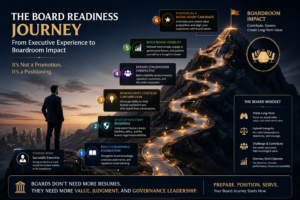
Audit Your Current Profile
Review your LinkedIn profile, board bio, executive biography, and networking conversations.
Ask yourself:
“Does this sound like a board candidate or a job seeker?”
Highlight Governance-Relevant Experience
Identify experiences involving:
- Risk oversight
- Strategy development
- Regulatory engagement
- Stakeholder management
- Audit interactions
- Transformation governance
Build Governance Visibility
Participate in:
- Industry forums
- Governance discussions
- Board education programs
- Thought leadership initiatives
Create a Board-Focused Narrative
Your story should answer one question clearly:
“Why would a board benefit from having me at the table?”
That answer becomes the foundation of your board positioning strategy.
Conclusion
The biggest mistake board aspirants make is not a lack of experience, expertise, or accomplishment. It is presenting themselves as executives seeking employment rather than governance leaders capable of contributing at the board level.
Boards do not appoint directors because they need another manager. They appoint directors because they need oversight, judgment, independence, strategic thinking, and governance contribution.
When aspiring directors shift their positioning from career advancement to governance impact, everything changes. Their profiles become more credible. Their conversations become more strategic. Their value proposition becomes more relevant.
The path to the boardroom is not about looking employable.
It is about looking indispensable from a governance perspective.
Ready to Position Yourself for the Boardroom?
If you’re serious about building a credible board profile, strengthening your board brand, and demonstrating genuine fiduciary readiness, invest time in refining how you present your governance value. The strongest board opportunities often go to professionals who understand not only what they have achieved, but how those achievements translate into board-level contribution.
Consider conducting a board readiness assessment to identify strengths, gaps, and opportunities before pursuing board appointments.
FAQs
- Who are board aspirants?
Board aspirants are professionals seeking appointments to corporate, advisory, nonprofit, or independent director boards.
- . Why do many Board Aspirants struggle to secure board positions?
Many Board Aspirants focus on executive achievements instead of demonstrating governance value and board readiness.
- What is board positioning?
Board positioning is the strategic presentation of experience and expertise in a way that highlights governance value.
- What is governance contribution?
Governance contribution refers to the value a director provides through oversight, strategic guidance, risk management, and accountability.
- What is fiduciary readiness?
Fiduciary readiness reflects preparedness to fulfill director responsibilities responsibly and effectively.
- How can Board Aspirants create a strong board profile?
Board Aspirants can create a strong board profile by highlighting governance experience, strategic insight, and oversight capabilities.
- Should executives create separate board bios?
Yes. A board bio should emphasize governance strengths and board value.
- Why is governance language important?
It signals board awareness and director-level thinking.
- Can CEOs become board directors?
Yes, but they must demonstrate governance competence alongside executive experience.
- What skills do boards value most?
Strategic thinking, risk oversight, governance knowledge, and independent judgment.
- What should Board Aspirants focus on when building board positioning?
Board Aspirants should focus on governance contribution, fiduciary readiness, and long-term strategic value.
- Does board education help?
Yes. Governance education demonstrates commitment and readiness.
- What role does networking play in board appointments?
Board opportunities often emerge through trusted professional networks.
- Is board experience necessary for a first board role?
Not always. Relevant governance exposure can also support candidacy.
- How can Board Aspirants demonstrate fiduciary readiness?
Board Aspirants can demonstrate fiduciary readiness through governance education, board exposure, and risk oversight experience.
Board opportunities rarely go to professionals who simply showcase executive accomplishments. They go to individuals who can demonstrate governance value, strategic judgment, and boardroom readiness. Effective board positioning helps aspiring directors communicate not just what they have achieved, but how those achievements translate into meaningful board-level contribution.
At Your Board Profile, we help executives strengthen their governance positioning and create a compelling board-ready identity for modern leadership opportunities.
Book a complimentary strategy session with Your Board Profile to explore your boardroom positioning and executive visibility journey.