
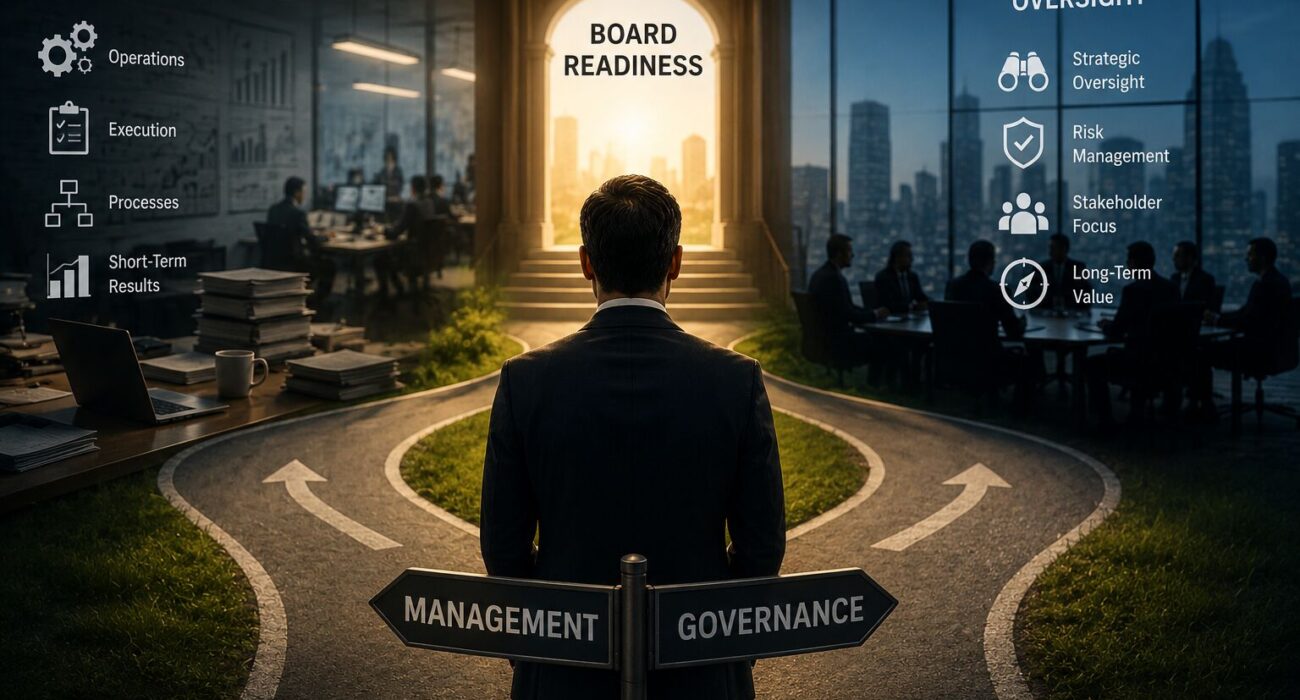
Many senior executives assume that years of leadership experience naturally qualify them for a board position. After all, if someone has successfully managed business units, led transformation initiatives, delivered growth, and held C-suite responsibilities, becoming a board director should be the logical next step.
Yet the reality is often very different.
Across industries, highly accomplished CXOs discover that board opportunities remain elusive despite impressive operational achievements. Recruiters, nomination committees, and existing board members frequently evaluate candidates through a completely different lens — one that prioritizes governance, strategic oversight, risk management, and independent judgment over operational execution.
This gap often surprises experienced executives. They have spent years running businesses, but board service requires a distinct mindset, different competencies, and a new understanding of value creation.
The challenge is not a lack of leadership capability. Rather, it is the transition from management to governance. Operational excellence may create executive success, but it does not automatically translate into board readiness.
In this article, we explore why successful CXOs often struggle with board readiness, the critical differences between management and oversight, and the competencies needed to successfully make the executive transition to board roles.
Table of Contents
- Understanding the Board Readiness Gap
- Why Operational Success Is Not Enough
- Oversight vs Management: The Most Common Transition Challenge
- The Director Competencies Boards Actually Seek
- The Importance of Corporate Governance Literacy
- Common Mistakes CXOs Make When Pursuing Board Roles
- Building Board Readiness: A Practical Framework
- Signs You Are Ready for a Board Role
- Conclusion
- FAQs
Understanding the Board Readiness Gap
Board readiness refers to an executive’s preparedness to contribute effectively at the board level. It goes beyond leadership experience and focuses on governance responsibilities, fiduciary duties, strategic oversight, stakeholder accountability, and independent decision-making.
Many executives build successful careers by solving problems, managing teams, driving execution, and delivering measurable outcomes. Boards, however, evaluate candidates differently.
A board member is not hired to run the business. They are expected to oversee management, challenge assumptions, evaluate risk, and guide long-term strategy.
This distinction creates a significant readiness gap for many accomplished CXOs.
Why the Gap Exists
The executive career path rewards action, speed, and execution. Boardrooms reward perspective, judgment, and oversight. The skills overlap, but the mindset differs substantially.
For executives planning their transition, developing a clear understanding of board expectations is essential. Organizations that specialize in board positioning and executive branding can help leaders assess how their experience aligns with board requirements.
Why Operational Success Is Not Enough
Operational leadership demonstrates the ability to manage resources and achieve business goals. However, boards look beyond execution. A successful board director must contribute to broader organizational governance and long-term sustainability.
The Difference in Expectations
| Executive Leadership | Board Leadership |
| Executes strategy | Oversees strategy |
| Manages teams | Evaluates leadership |
| Solves operational issues | Monitors systemic risks |
| Focuses on performance | Focuses on governance |
| Drives implementation | Provides oversight |
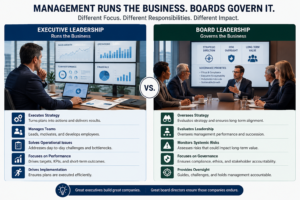
A CEO may spend every day making decisions that directly impact business operations. A board director must instead evaluate whether management’s decisions align with the organization’s long-term interests. This shift often requires executives to rethink how they create value.
Experience Alone Does Not Guarantee Readiness
Many nomination committees seek candidates who demonstrate governance awareness, independent thinking, and an understanding of board dynamics. Resources provided by the National Association of Corporate Directors (NACD) — including director certification, governance research, and peer education programs — can help executives understand the evolving expectations boards hold for incoming directors.
Oversight vs Management: The Most Common Transition Challenge
One of the biggest barriers to board readiness is understanding the distinction between oversight and management. Many first-time directors unintentionally approach board discussions with a management mindset.
What Management Looks Like
Managers focus on: operational decisions, team performance, budget execution, process improvements, and daily problem-solving.
What Oversight Looks Like
Board directors focus on: strategic direction, risk governance, executive accountability, long-term sustainability, and stakeholder interests.
Why This Distinction Matters
A board director who becomes overly involved in operations can create governance challenges. Boards are expected to provide guidance without interfering in management responsibilities. This balance requires discipline and maturity.
As the Harvard Law School Forum on Corporate Governance notes, directors may meet with management, ask questions, and request data relevant to their oversight role — but the line between oversight and management interference must be clearly understood and respected.
Executives who successfully transition understand that influence at the board level comes through questioning, challenging assumptions, and providing strategic perspective — not managing day-to-day activities.
The Director Competencies Boards Actually Seek
Many aspiring directors underestimate how specific board expectations have become. Today’s boards seek expertise, but they also prioritize governance-related competencies.
Strategic Thinking
Directors must evaluate decisions through a long-term lens. Board discussions often focus on market disruption, emerging risks, capital allocation, succession planning, and stakeholder impact.
Independent Judgment
Board members must remain objective, even when facing pressure from management. Strong directors ask difficult questions and challenge assumptions constructively. As executive branding research highlights, leaders who demonstrate independent authority in their professional presence are more likely to be perceived as board-ready by nomination committees.
Risk Oversight
Modern boards play a critical role in enterprise risk management. According to the G20/OECD Principles of Corporate Governance (2023), boards are increasingly expected to oversee risk, sustainability, and stakeholder accountability — including climate-related risks, supply chain disruptions, and geopolitical uncertainty.
Financial Literacy
Even non-financial directors must understand financial statements, capital structures, audit processes, and risk indicators.
Boardroom Communication
Board discussions require concise communication, thoughtful questioning, and collaborative decision-making. These skills differ significantly from executive presentations focused on operational updates.
The Importance of Corporate Governance Literacy
A surprisingly large number of senior executives underestimate the importance of corporate governance literacy. Boards operate within legal, regulatory, and fiduciary frameworks that many executives encounter only indirectly during their management careers.
What Governance Literacy Includes
- Fiduciary responsibilities
- Board committee structures
- Regulatory compliance
- Stakeholder accountability
- ESG oversight
- Director liabilities
Why Governance Knowledge Matters
Without governance knowledge, even experienced executives may struggle to contribute effectively in board discussions. Many governance experts recommend formal board education programs as part of the executive transition process. The Harvard Law School Forum on Corporate Governance regularly publishes research on fiduciary duties, board oversight obligations, and how courts evaluate director conduct — making it an essential resource for executives preparing for board service.
Governance Is Becoming More Complex
Today’s boards must navigate cybersecurity risks, ESG reporting requirements, AI governance, geopolitical uncertainty, and shareholder activism. This complexity makes governance literacy an increasingly valuable competency. You can begin developing yours through the executive development and governance programs designed for leaders making this transition.
Common Mistakes CXOs Make When Pursuing Board Roles
Even highly accomplished executives can unintentionally weaken their board candidacy.
1. Positioning Themselves as Operators
Boards value strategic perspective more than operational detail. Candidates who emphasize only execution achievements may miss opportunities to demonstrate governance capability.
2. Using an Executive CV Instead of a Board Profile
A board profile differs significantly from a traditional executive résumé. It focuses on governance value, strategic contributions, committee readiness, and board-level expertise. As Robert Half’s analysis of board versus executive resumes makes clear, board profiles highlight governance experience and strategic oversight — not operational metrics and team management. Understanding why many board CVs hurt independent director careers is the first step to getting yours right.
3. Ignoring Personal Brand Positioning
Many board appointments occur through reputation and relationships rather than traditional recruitment channels. A strong digital board presence can significantly enhance visibility. Boardsi’s research on executive visibility shows that your digital footprint is your reputation — it either opens boardroom doors or quietly keeps them shut. Building the right CXO personal brand and strategic positioning is no longer optional for serious board candidates.
4. Underestimating Networking
Board opportunities frequently emerge through professional networks, industry associations, and existing directors. Building meaningful relationships remains essential.
5. Waiting Until Retirement
Board readiness should begin years before seeking a board appointment. The strongest candidates prepare proactively.
Building Board Readiness: A Practical Framework
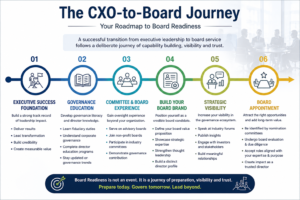
Executives can improve board readiness by focusing on several key areas.
Step 1: Develop Governance Expertise
Pursue governance education programs, certifications, and director training opportunities. The NACD Board Readiness curriculum is specifically designed for the transition into directorship — covering governance fundamentals, oversight frameworks, and the fluency needed to contribute from day one.
Step 2: Gain Committee Experience
Committee participation provides valuable governance exposure. Relevant committees include Audit, Risk, Compensation, and Nomination and Governance.
Step 3: Build a Board-Oriented Personal Brand
Your online presence should communicate board value rather than operational achievements alone. A board-focused personal brand helps nomination committees understand your governance capabilities. Executive personal branding research for 2026 confirms that thought leadership has replaced credentials as the primary authority signal — original, experience-based insights shared consistently establish authority that transcends a traditional résumé.
Step 4: Expand Strategic Visibility
Speak at industry events, contribute thought leadership, and participate in governance discussions. Explore how building a digital footprint for board directors can position you in front of the right decision-makers.
Step 5: Create a Board-Ready Profile
| Traditional Executive Resume | Board Profile |
| Operational achievements | Governance contributions |
| Functional expertise | Strategic oversight |
| Management responsibilities | Board value proposition |
| Execution metrics | Director competencies |
Explore board readiness support for emerging directors to understand exactly how to craft a profile that nomination committees notice.
Signs You Are Ready for a Board Role
While every board journey is unique, several indicators suggest increasing readiness.
You Think Beyond Operations
You regularly evaluate issues from a governance and stakeholder perspective.
You Understand Board Dynamics
You recognize the importance of independence, oversight, and fiduciary responsibility.
You Demonstrate Strategic Judgment
You contribute insights beyond your functional expertise. As Russell Reynolds’ research on board readiness signals highlights, what makes the real difference is simpler than people expect: chairs try to picture you in the room, contributing meaningfully from day one.
You Have Governance Exposure
Committee participation, advisory positions, and governance education strengthen board preparedness.
You Have a Clear Board Value Proposition
You can articulate exactly why a board should benefit from your expertise. If you are unsure how to frame this, Your Board Profile is built specifically to help leaders translate experience into a board-ready narrative.
Conclusion
Many accomplished CXOs assume board opportunities will naturally follow executive success. In reality, board readiness requires more than leadership experience.
The transition from management to governance demands a shift in mindset, new competencies, and a broader understanding of strategic oversight.
The most successful directors are not simply exceptional operators. They are individuals who understand the distinction between oversight and management, possess strong governance literacy, demonstrate independent judgment, and contribute long-term strategic value.
For executives aspiring to board service, the journey begins with recognizing that operational excellence is only one part of the equation. True board readiness comes from intentionally developing the skills, perspective, and positioning required to thrive in the boardroom.
Ready to Position Yourself for Board Opportunities?
Whether you are a CXO planning your first board role or an experienced executive seeking greater board visibility, investing in your board profile, governance positioning, and strategic personal brand can significantly improve your readiness.
Explore professional board branding and profile development solutions to strengthen your board candidacy and stand out to nomination committees.
FAQs
- What is board readiness?
Board readiness refers to an executive’s ability to effectively contribute at the board level through governance, oversight, and strategic guidance.
- Why do successful CXOs struggle with board readiness?
Many executives excel at management but have limited experience in governance and board oversight responsibilities.
- What is the difference between oversight and management?
Management runs daily operations, while boards oversee strategy, risk, and executive accountability.
- Is board readiness important before seeking board appointments?
Yes. Early preparation significantly improves board opportunities.
- What are the most important director competencies?
Strategic thinking, governance literacy, financial understanding, risk oversight, and independent judgment.
- Can a CEO automatically become a board director?
Not necessarily. Board service requires different skills and responsibilities.
- Why is corporate governance literacy important?
It helps directors understand fiduciary duties, compliance obligations, and governance frameworks.
- How can executives gain governance experience?
Through board education, advisory roles, committee participation, and governance programs.
- What is a board profile?
A board profile is a governance-focused document highlighting board value and strategic expertise.
- How is a board profile different from a resume?
It emphasizes governance contributions rather than operational achievements.
- Do boards value industry expertise?
Yes, but governance capabilities remain equally important.
- How important is personal branding for board appointments?
A strong board-focused personal brand increases visibility and credibility.
- Should executives prepare for board roles before retirement?
Yes. Preparation should begin several years before pursuing board opportunities.
- What role does networking play in board appointments?
Networking remains one of the most effective pathways to board opportunities.
- How can executives assess their board readiness?
Through governance assessments, board education, and feedback from experienced directors.
Ready to Strengthen Your Board Presence and Unlock New Board Opportunities?
A successful executive career is a great foundation, but board readiness requires a different mindset. If you’re planning your transition to a board role, building a strong board profile and governance-focused personal brand can help you stand out and open new opportunities.
Whether you’re an aspiring Independent Director, CXO, Founder, or senior executive, a well-positioned board profile can make all the difference in today’s competitive board landscape.
Book a complimentary strategy session with Your Board Profile today.