

Your Board Profile is glad to announce it’s new initiative to groom MBA students
Becoming a board director isn’t something that starts after becoming a CEO. It starts much earlier—with the decisions you make as a student or young professional.
Today’s organizations are looking for leaders who can think strategically, understand governance, and make sound decisions. These qualities aren’t built overnight. They develop through continuous learning, mentorship, and real-world exposure.
If you’ve ever wondered how to become a board director, the answer isn’t simply gaining years of experience. It’s about building the right mindset, developing executive presence, and learning how businesses are governed from the inside out.
That’s exactly what the Classroom to Boardroom initiative aims to do. It prepares ambitious students for leadership long before they enter the boardroom by connecting them with experienced directors, governance professionals, and business leaders.
Whether your goal is to become a board director, a governance professional, or follow an executive assistant career path to leadership, starting early gives you a lasting advantage.
Table of Contents
- Why Board Leadership Starts Earlier Than You Think
- What Is the Classroom to Boardroom Initiative?
- Why Future Board Directors Need More Than Academic Excellence
- A Step-by-Step Roadmap to Becoming a Board Director
- The Executive Assistant Career Path to Leadership
- Why Corporate Governance Mentorship Matters
- A Strategic Framework for Future Board Leaders
- Common Mistakes Aspiring Board Directors Make
- Your Board Leadership Checklist
- Conclusion
- FAQs
Why Board Leadership Starts Earlier Than You Think
Many professionals believe that board positions are reserved for people with decades of experience. While experience certainly matters, the journey begins much earlier.
The best board directors spend years developing strategic thinking, leadership judgment, and governance knowledge before they ever receive a board invitation.
The Modern Boardroom Has Changed
Today’s boards oversee much more than financial performance. Directors are expected to understand digital transformation, cybersecurity, sustainability, risk management, and stakeholder expectations.
Recent corporate governance reports also show a growing focus on independent oversight, board diversity, and long-term value creation. This means future directors need broader skills than ever before.
Start Building Governance Skills Early
Leadership isn’t only learned in the workplace. College is the perfect time to develop communication, decision-making, networking, and strategic thinking.
Students who begin learning corporate governance early often gain a competitive advantage when they move into management and executive roles.
What Is the Classroom to Boardroom Initiative?
The Classroom to Boardroom initiative is designed to identify and mentor students with exceptional leadership potential.
Instead of waiting until professionals become senior executives, the program helps participants understand boardroom thinking from the very beginning of their careers.
Learn Directly from Industry Leaders
Selected students receive mentorship from experienced board directors, governance professionals, and senior executives.
These conversations provide practical insights that textbooks simply cannot offer. Participants learn how leaders make strategic decisions, manage risk, and create long-term business value.
Who Should Apply?
This initiative is ideal for students who:
- Aspire to become board directors or governance professionals.
- Want to build an executive assistant career path to leadership.
- Are passionate about business strategy and leadership.
- Want exposure to experienced executives and board mentors.
- Are committed to continuous personal and professional growth.
Why Future Board Directors Need More Than Academic Excellence
Strong grades may open your first career door, but they rarely earn you a seat in the boardroom.
Board directors are chosen because they bring judgment, credibility, strategic thinking, and the ability to guide organizations through uncertainty.
Leadership Is Different from Management
Managers focus on execution.
Board directors focus on direction.
They ask difficult questions, challenge assumptions, oversee risk, and help shape the organization’s future.
Developing this perspective early allows young professionals to grow into leadership roles with confidence.
Executive Presence Starts Before the Executive Title
Executive presence isn’t about authority or job titles.
It’s about how you communicate, solve problems, build trust, and influence others.
Students who invest in public speaking, networking, business writing, and governance education naturally stand out as future leaders.
A Step-by-Step Roadmap to Becoming a Board Director
There is no single formula for becoming a board director. Every successful director has a different journey, but they all share one thing in common—they prepare long before the opportunity arrives.
Instead of chasing a board seat, focus on becoming someone who naturally belongs in the boardroom.
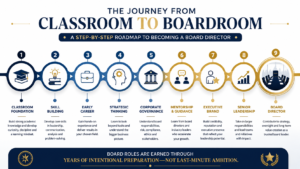
Build a Strong Professional Foundation
Your career should begin with mastering your chosen field. Whether you work in finance, HR, marketing, operations, law, or technology, becoming known for delivering results builds credibility.
Strong functional expertise creates the confidence and reputation that later supports leadership opportunities.
Learn Corporate Governance
Understanding how organizations are governed is just as important as understanding how they operate.
Start learning about:
- Board responsibilities
- Risk management
- Corporate ethics
- Compliance
- Financial oversight
- Stakeholder management
These concepts shape the way directors think and make decisions.
Develop Strategic Thinking
Managers solve today’s problems.
Board directors prepare organizations for tomorrow.
Practice looking beyond daily tasks. Ask questions like:
- Where is the industry heading?
- What risks could impact the business?
- Which opportunities deserve long-term investment?
- How can leadership create sustainable value?
Thinking strategically early in your career sets you apart from your peers.
Invest in Executive Branding
Your reputation begins long before your first board appointment.
Share thoughtful insights, participate in professional discussions, attend industry events, and build a credible LinkedIn presence.
A strong personal brand makes it easier for opportunities to find you.
The Executive Assistant Career Path to Leadership
Many people underestimate the Executive Assistant (EA) role.
In reality, it can become one of the fastest paths to executive leadership when approached strategically.
Why Executive Assistants Gain Unique Leadership Exposure
Working closely with CEOs and founders offers a front-row seat to executive decision-making.
Executive Assistants often witness:
- Board meetings
- Strategic planning
- Investor discussions
- Crisis management
- Leadership communication
- Business negotiations
This exposure builds business judgment that many professionals don’t gain until much later in their careers.
Turn Exposure into Experience
Simply attending meetings isn’t enough.
Take notes, understand why decisions are made, observe leadership styles, and learn how executives communicate with stakeholders.
Every interaction becomes a leadership lesson.
For ambitious professionals, the executive assistant career path to leadership can become an exceptional launchpad toward governance and board responsibilities.
Why Corporate Governance Mentorship Matters
Experience is valuable.
Learning directly from experienced leaders is even more valuable.
That is why corporate governance mentorship for students plays such an important role in accelerating leadership development.
Learn What Books Cannot Teach
A mentor shares lessons from real boardrooms.
They explain how difficult decisions are made, how directors handle conflicts, and how businesses balance growth with governance.
These practical insights help students understand leadership beyond theory.
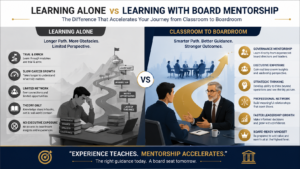
Build the Right Network
Careers often grow through meaningful relationships.
Mentorship introduces students to professionals who can offer guidance, opportunities, and constructive feedback throughout their careers.
A strong network doesn’t guarantee success, but it certainly opens more doors.
The Classroom to Boardroom Advantage
Most graduates enter the workforce focused only on securing a job.
The Classroom to Boardroom initiative encourages participants to think much bigger.
Instead of asking, “How can I get hired?”
It encourages a better question:
“How can I become the kind of leader organizations trust at the highest level?”
That shift in mindset changes everything.
Participants don’t just build knowledge.
They build confidence, leadership skills, governance awareness, and executive presence—all qualities that future employers and boards value.
Board Leadership Journey at a Glance

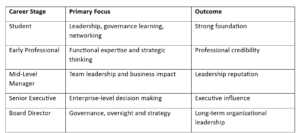
A Strategic Framework for Future Board Leaders
Success in the boardroom is rarely the result of one promotion or one qualification. It is built through consistent growth across multiple areas. The Classroom to Boardroom initiative encourages aspiring leaders to focus on five key pillars throughout their career.
The 5P Board Leadership Framework

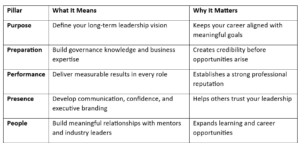
This framework isn’t about reaching the boardroom quickly—it’s about becoming the kind of leader who deserves a seat there.
Common Mistakes Aspiring Board Directors Make
Many professionals delay preparing for board opportunities because they assume there is plenty of time. Unfortunately, that mindset often leaves them playing catch-up later in their careers.
Here are some common mistakes to avoid.
Waiting Until Senior Leadership
Governance skills take years to develop. Starting early gives you a significant advantage over those who begin learning only after reaching executive positions.
Focusing Only on Technical Skills
Being excellent at your job is important, but board directors are expected to think beyond their area of expertise. Strategic thinking, business judgment, and communication are equally valuable.
Ignoring Professional Branding
Your reputation influences the opportunities you receive. A well-crafted LinkedIn profile, thought leadership, and active participation in industry discussions help establish your credibility.
Overlooking Mentorship
Trying to navigate your career alone often slows progress. Learning from experienced professionals helps you avoid common mistakes and gain practical insights that accelerate your growth.
Your Board Leadership Checklist
Use this checklist to evaluate whether you’re building the right foundation for future board opportunities.
- ✅ Understand the fundamentals of corporate governance.
- ✅ Develop strong communication and presentation skills.
- ✅ Build expertise in your chosen profession.
- ✅ Learn strategic thinking and business analysis.
- ✅ Find mentors who can guide your leadership journey.
- ✅ Expand your professional network consistently.
- ✅ Build a credible executive brand online and offline.
- ✅ Stay informed about business trends and governance developments.
- ✅ Demonstrate integrity and ethical decision-making.
- ✅ Commit to continuous learning throughout your career.
The more boxes you can confidently tick, the closer you are to becoming board-ready.
Why the Journey Starts Today
Every accomplished board director was once a student or young professional trying to understand the business world.
The difference is that they didn’t wait for leadership opportunities to appear—they prepared for them.
The Classroom to Boardroom initiative is designed to help ambitious individuals accelerate that preparation. By combining mentorship, governance education, leadership development, and executive exposure, it equips participants with the mindset needed to lead with confidence.
If you’re serious about learning how to become a board director, don’t wait until you’re invited into the boardroom. Start developing the knowledge, relationships, and leadership qualities that make you the obvious choice when the opportunity comes.
Conclusion
The journey from the classroom to the boardroom doesn’t happen overnight, but it does begin with a single decision—to invest in yourself.
Learning how to become a board director is about far more than earning promotions or collecting job titles. It’s about developing strategic thinking, governance expertise, executive presence, and the ability to create long-term value for organizations.
The earlier you begin building these capabilities, the stronger your leadership foundation becomes. Whether your ambition is to serve on a corporate board, become an independent director, or lead at the executive level, every step you take today shapes the opportunities you’ll receive tomorrow.
FAQs
- How can I become a board director?
Start by building leadership experience, learning corporate governance, developing strategic thinking, and seeking mentorship from experienced leaders.
- Can students prepare for board leadership?
Yes. Learning governance, networking, and leadership skills early provides a strong foundation for future board opportunities.
- What is the Classroom to Boardroom initiative?
It is a mentorship-driven program that helps ambitious students develop governance knowledge, leadership capabilities, and executive exposure.
- Is an MBA required to become a board director?
No. While an MBA can help, practical leadership experience, governance expertise, and professional credibility are equally important.
- Why is corporate governance important?
Corporate governance ensures organizations are managed ethically, strategically, and in the best interests of stakeholders.
- How does mentorship help future leaders?
Mentors share practical insights, career guidance, and industry experience that accelerate professional growth.
- Can an Executive Assistant become a board director?
Yes. The executive assistant career path to leadership offers valuable exposure to executive decision-making and strategic leadership.
- What skills do board directors need?
Strategic thinking, communication, financial literacy, governance knowledge, ethical judgment, and leadership.
- What is executive presence?
Executive presence is the ability to communicate confidently, build trust, and influence decisions at senior levels.
- When should I start preparing for a board role?
As early as possible. Developing governance and leadership skills takes time and consistent effort.
- How important is networking for board careers?
Networking helps build meaningful relationships that can lead to mentorship, learning, and future board opportunities.
- What industries need board directors?
Almost every industry, including finance, healthcare, technology, manufacturing, education, and non-profit organizations.
- How can I improve my governance knowledge?
Read governance reports, attend leadership programs, join professional associations, and learn from experienced board members.
- What makes someone board-ready?
A combination of leadership experience, governance understanding, credibility, strategic thinking, and ethical decision-making.
- How can Your Board Profile help?
Your Board Profile supports professionals through executive branding, board advisory, governance strategy, and board-readiness guidance.
Ready to Build a Board Profile That Boards Trust?
At Your Board Profile, we help aspiring directors, CXOs, and professionals strengthen their executive brand, build governance credibility, and position themselves for board-level opportunities. Explore our board advisory, executive branding, and governance strategy services to take the next step toward your leadership goals.
Whether you’re an aspiring Independent Director, CXO, Founder, or senior executive, a well-positioned board profile can make all the difference in today’s competitive board landscape.
Schedule your complimentary Session here: