

Many highly accomplished CXOs never receive a board invitation, while others with similar experience find themselves joining multiple boards. The difference is rarely the number of years they’ve worked or the titles they’ve held. Instead, it lies in something much less visible but far more influential—the way people perceive their leadership.
That is why understanding how to get board roles in India requires a completely different mindset from building an executive career.
Today’s boards are looking beyond operational excellence. They want leaders who can think independently, challenge management constructively, anticipate risks before they become crises, and make balanced decisions that protect long-term stakeholder value. In other words, companies aren’t searching for another executive to run the business—they’re searching for someone who can strengthen the governance of the business.
This shift has become even more significant as Indian boards navigate emerging technologies, cybersecurity threats, ESG expectations, regulatory scrutiny, geopolitical uncertainty, and changing investor expectations. According to recent governance studies, boards are placing greater emphasis on strategic oversight, risk governance, digital transformation, and director independence than ever before. These evolving expectations mean that professional reputation has become just as important as professional experience.
Think about it for a moment.
When your name reaches a Nomination and Remuneration Committee, the committee already knows something about you. They have heard your reputation through industry networks. They’ve seen your visibility at leadership forums. They may have read your articles, watched your interviews, or spoken to people who have worked with you. Long before an interview takes place, people have already formed opinions about your judgment, credibility, and leadership style.
That’s why board appointments begin years before the vacancy appears.
They begin with the signals you consistently send.
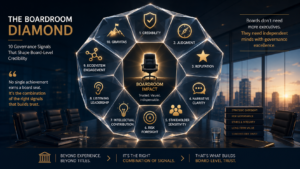
This article introduces The Boardroom Diamond, a practical framework built around ten governance signals that shape board-level credibility. These signals—credibility, judgment, reputation, narrative clarity, stakeholder sensitivity, risk foresight, intellectual contribution, listening leadership, ecosystem engagement, and gravitas—work together to create the professional reputation that boards trust.
If you’re a CXO, founder, business leader, or aspiring independent director wondering how to get board roles in India, this framework will help you understand what truly differentiates board candidates in today’s governance landscape.
Table of Contents
- The Big Shift: The Transition from Executive to Board Member
- The 10 Governance Signals of the Boardroom Diamond
- Supporting Assets That Strengthen Your Board Profile
- Practical Action Plan to Position Yourself for Board Opportunities
- Conclusion
- FAQs
The Big Shift: The Transition from Executive to Board Member
Have you ever wondered why some highly successful CXOs never get invited to join a board, while others seem to receive multiple opportunities?
The answer usually isn’t experience.
It’s positioning.
Boards aren’t hiring another executive. They’re looking for someone who can provide independent judgment, challenge management, and think beyond quarterly performance.
That’s the biggest shift every aspiring director must understand.
From Execution to Oversight
As an executive, you’re responsible for making things happen.
As a board member, your responsibility changes completely. You’re expected to ask better questions, oversee strategy, monitor risks, and protect long-term stakeholder value.
The role isn’t about running the company.
It’s about helping the company make better decisions.
Why Traditional Executive Positioning Falls Short
Many executive profiles focus on achievements like revenue growth, operational excellence, or team leadership.
Those accomplishments certainly matter.
But board recruiters look beyond execution. They want evidence of governance thinking, balanced judgment, ethical leadership, and the ability to influence without authority.
A great operator doesn’t automatically become a great director.
What NRCs Really Buy
Nomination and Remuneration Committees aren’t buying your ability to execute tasks.
They’re buying your:
- judgment
- credibility
- governance mindset
- risk foresight
- stakeholder sensitivity
- boardroom gravitas
That’s what separates executives from future directors.
The 10 Governance Signals of the Boardroom Diamond
Think of a diamond for a moment. It isn’t valuable because of one perfect surface. Its brilliance comes from multiple facets working together.
The same applies to board readiness.
No single achievement, certification, or designation guarantees a board seat. Instead, boards assess a combination of signals that reveal how you think, lead, and govern. These ten governance signals form the Boardroom Diamond—a practical framework for executives who want to understand how to get board roles in India.
Signal 1: Credibility
You cannot build a board career without trust.
Every board appointment starts with one simple question: “Can we trust this person to protect the organization’s long-term interests?”
Credibility isn’t created by your designation alone. It’s earned through consistent decisions, ethical leadership, and delivering on commitments over time.
How to Build Credibility
- Keep your professional reputation consistent
- Demonstrate integrity during difficult decisions
- Build governance knowledge—not just operational expertise
- Let others speak about your credibility before you do
When credibility becomes your personal brand, opportunities begin to find you.
Signal 2: Judgment
Executives are rewarded for making decisions.
Directors are valued for making the right decisions.
Boards don’t expect directors to have every answer. They expect them to ask thoughtful questions, challenge assumptions, and balance short-term pressures with long-term value.
Judgment Is Visible During Uncertainty
Anyone can lead when business is predictable.
True judgment appears when organizations face:
- Market disruption
- Regulatory uncertainty
- Cyber threats
- Reputation crises
- Strategic dilemmas
How you respond in these moments becomes part of your board reputation.
Signal 3: Reputation
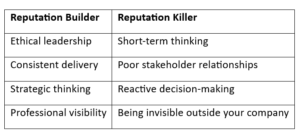
Long before you enter a board interview, your reputation has already arrived.
That’s why executives often hear about board opportunities through referrals instead of applications.
People recommend leaders they trust.
Your Reputation Is Built Every Day
Ask yourself:
- What are people saying when I’m not in the room?
- What leadership qualities am I known for?
- Would someone confidently recommend me for a board role?
A strong reputation is one of the biggest advantages for executives exploring how to get board roles in India.
Signal 4: Narrative Clarity
Most executives have impressive careers.
Very few can explain them clearly.
Your board story should answer one question:
“Why would this executive add value inside a boardroom?”
If your career sounds like a list of promotions, you’ve missed the opportunity.
If it explains how you’ve solved strategic problems, navigated crises, and strengthened governance, you’re much closer.
Why Thought Leadership Matters
Today’s boards increasingly notice executives who contribute ideas—not just business results.
Publishing articles.
Speaking at governance forums.
Sharing perspectives on emerging risks.
Participating in industry discussions.
These activities demonstrate that your thinking extends beyond your own organization.
Thought leadership has become a modern trust signal because it shows you’re actively shaping conversations, not simply participating in them.
Signal 5: Stakeholder Sensitivity
Successful executives often focus on customers, employees, and shareholders
Board directors must think much broader
Every decision affects multiple stakeholders
Sometimes their interests even conflict
Boards Value Balanced Thinking
Great directors ask questions like:
- How will regulators view this decision?
- What does this mean for employees?
- How does it impact investors?
- Does it strengthen long-term trust?
That balanced perspective separates governance leaders from operational leaders.
A director who understands multiple stakeholder perspectives is far more valuable than one who focuses on financial performance alone.
Signal 6: Risk Foresight
Boards are expected to look around corners.
The best directors don’t just react to problems—they anticipate them. Whether it’s AI disruption, cybersecurity threats, regulatory changes, ESG expectations, or geopolitical uncertainty, boards value leaders who can spot emerging risks early.
What Boards Look For
Ask yourself:
- Do I think beyond today’s numbers?
- Can I identify risks before they become headlines?
- Have I helped organizations prepare for uncertainty?
Risk foresight is one of the clearest signals of board-level thinking.
Signal 7: Intellectual Contribution
A board seat isn’t a reward for past success. It’s an opportunity to contribute valuable thinking.
Directors are expected to bring fresh perspectives, challenge assumptions, and help management see opportunities and risks that may not be obvious.
How to Demonstrate Intellectual Contribution
- Publish insights on industry trends
- Speak at leadership forums
- Participate in governance discussions
- Stay informed about technology, ESG, and regulatory changes
Curiosity is often more valuable than certainty in a boardroom.
Signal 8: Listening Leadership
Many executives are trained to provide answers quickly.
Great directors are different.
They listen deeply, ask thoughtful questions, and create space for better decisions.
Why Listening Matters
In a boardroom, influence doesn’t come from talking the most. It comes from helping the group think more clearly.
Leaders who can listen without rushing to conclusions often become the most respected voices in the room.
Signal 9: Ecosystem Engagement
Board opportunities rarely come from job portals.
They come from relationships, reputation, and visibility within the leadership ecosystem.
Build Presence Beyond Your Company
Consider participating in:
- Industry associations
- Governance forums
- Advisory boards
- Leadership communities
- Director workshops
Thought leadership for board directors has become a powerful trust signal because it shows you’re contributing to broader business conversations, not just managing internal operations. For executives looking to strengthen their board visibility, resources such as boardroom branding begins and building a trusted board portfolio career can help shape a stronger board-facing narrative.
Signal 10: Gravitas
Gravitas is difficult to define but easy to recognize.
It’s the ability to remain calm under pressure, speak with clarity, and influence without needing to dominate the room.
Gravitas Is Not About Being Loud
Boards value leaders who:
- Stay composed during crises
- Communicate with clarity
- Demonstrate confidence without ego
- Earn respect through presence rather than authority
For many aspiring directors, this becomes the final differentiator in how to get board roles in India.
Supporting Assets That Strengthen Your Board Profile
The ten governance signals create the foundation. These supporting assets make that foundation visible to boards and recruiters.
Building a Strong Non-Executive Director CV
A non-executive director CV should look very different from an executive resume.
Instead of listing every operational responsibility, focus on:
- Strategic initiatives
- Governance experience
- Risk oversight
- Board committees
- Transformation leadership
- Stakeholder management
- Long-term value creation
A board CV should answer one question quickly: “How will this person contribute in a boardroom?” For executives who want professional support, board profile services can help position experience in a board-relevant way.
Working with Board Search Firms in India
Many senior leaders assume board appointments happen only through personal networks.
Networks matter, but board search firms India also play an important role, especially for listed companies and larger organizations.
What Search Firms Typically Look For
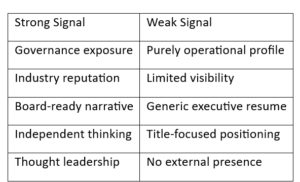
The goal isn’t to chase recruiters. It’s to become the kind of candidate recruiters want to find.
Preparing for Independent Director Interview Questions
Board interviews are very different from executive interviews.

You may be asked:
- How would you challenge management respectfully?
- What governance risks concern you most?
- How would you handle a conflict of interest?
- What questions would you ask after joining a board?
- How do you balance shareholder and stakeholder interests?
Practicing these independent director interview questions helps you shift from an executive mindset to a governance mindset. For executives preparing for this transition, board leadership workshops can provide valuable boardroom exposure and simulation experience.
Practical Action Plan to Position Yourself for Board Opportunities
If you’re serious about how to get board roles in India, start with a simple 12-month plan.
Month 1–3: Build Governance Depth
- Study board governance and SEBI regulations
- Understand audit, risk, ESG, and cybersecurity oversight
- Identify gaps in your board knowledge
Month 4–6: Strengthen Your Narrative
- Create a board-focused profile
- Refine your non-executive director CV
- Clarify the strategic value you bring
Month 7–9: Increase Visibility
- Publish thought leadership
- Speak at industry events
- Join governance communities
- Build relationships with board professionals
Month 10–12: Create Board Evidence
- Seek advisory roles
- Mentor founders or startups
- Participate in board simulations
- Practice independent director interview questions
Consistency matters more than speed.
Conclusion
Learning how to get board roles in India is not about collecting titles, certifications, or networking cards.
It’s about becoming the leader whom boards already trust before the opportunity appears.
The Boardroom Diamond offers a practical way to think about that journey. Credibility, judgment, reputation, narrative clarity, stakeholder sensitivity, risk foresight, intellectual contribution, listening leadership, ecosystem engagement, and gravitas are not separate skills—they are reinforcing signals that shape how boards perceive future directors.
Executives who intentionally build these signals stand out in a crowded leadership market. They move from being successful operators to becoming trusted governance advisors.
And that is often the moment board opportunities begin to arrive.
FAQs
- How do I get board roles in India?
Build governance expertise, strengthen your professional reputation, expand your board network, and consistently demonstrate strategic leadership.
- What qualifications are required to become a board director in India?
While qualifications vary by company, governance knowledge, relevant industry experience, and strategic judgment are highly valued.
- Is executive experience enough to secure a board position?
No. Boards also assess credibility, governance mindset, reputation, and the ability to provide independent oversight.
- How can I make my profile more attractive to Nomination and Remuneration Committees?
Focus on governance exposure, thought leadership, strategic visibility, and a board-focused professional brand.
- What is the difference between an executive résumé and a non-executive director CV?
A non-executive director CV highlights governance experience, strategic oversight, risk management, and board-level contributions rather than operational responsibilities.
- Why is professional reputation important for board appointments?
A strong reputation builds trust and often influences board opportunities before formal interviews begin.
- How can thought leadership improve my chances of joining a board?
Publishing insights and speaking on governance topics demonstrates expertise, credibility, and board-level thinking.
- Do board search firms help executives find board opportunities in India?
Yes. Many board search firms India identify candidates based on governance readiness, reputation, industry expertise, and leadership visibility.
- What skills do boards value most in independent directors?
Boards value strategic thinking, sound judgment, risk oversight, stakeholder management, integrity, and independent decision-making.
- How should I prepare for independent director interview questions?
Study governance principles, understand current board challenges, prepare real leadership examples, and practice answering scenario-based questions.
- Can I get a board role without prior board experience?
Yes. Advisory positions, governance certifications, committee experience, and thought leadership can strengthen your board readiness.
- How important is networking for securing board roles in India?
Networking is essential because many board appointments originate through trusted professional relationships and industry referrals.
- What common mistakes prevent executives from getting board positions?
Overemphasizing operational achievements, lacking governance exposure, maintaining low professional visibility, and having a generic executive profile.
- How long does it take to become board-ready?
The timeline varies, but consistently building governance experience, visibility, and credibility over time significantly improves board prospects.
- What is the Boardroom Diamond framework?
The Boardroom Diamond is a framework built around ten governance signals—credibility, judgment, reputation, narrative clarity, stakeholder sensitivity, risk foresight, intellectual contribution, listening leadership, ecosystem engagement, and gravitas—that help executives prepare for board roles.
Ready to Build a Board Profile That Boards Trust?
Your executive experience has already proven that you can lead. Now it’s time to demonstrate that you can govern.
At Your Board Profile, we help senior executives, CXOs, founders, and aspiring independent directors build a compelling board-ready identity through strategic positioning, governance-focused branding, board CVs, thought leadership, and executive visibility.
Whether you’re an aspiring Independent Director, CXO, Founder, or senior executive, a well-positioned board profile can make all the difference in today’s competitive board landscape.
Schedule your complimentary Session here: