

For decades, senior executives believed that their designation alone was enough to create influence. A CEO title, a CXO position, or a prestigious company name automatically commanded respect. That world has changed dramatically. Today, executive recruiters, investors, board nomination committees, and stakeholders increasingly evaluate leaders based on something much broader than their current position—they evaluate their executive personal branding.
Think about it for a moment. If you step down from your current role tomorrow, what remains? Does your market credibility disappear with your title, or does your influence continue because people recognize your expertise, judgement, and leadership philosophy? That distinction separates executives who build long-term career equity from those whose reputations are tied entirely to their employer.
Recent studies indicate that executives with strong personal brands attract opportunities faster, expand influence beyond organizational boundaries, and create significant business value through enhanced credibility and visibility. Research also shows that visible leaders are trusted more by stakeholders than anonymous corporate representatives.
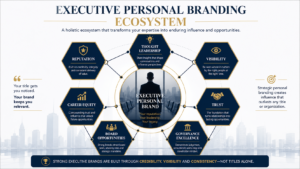
The reality is simple: your designation introduces you, but your personal brand keeps you relevant.
Table of Contents
- What Is Executive Personal Branding?
- Why Your Designation Is No Longer Enough
- Understanding the Transferable Leadership Narrative
- How to Build Executive Personal Branding That Outlasts Your Current Role
- Executive Reputation Management Is No Longer Optional
- Common Executive Personal Branding Mistakes CXOs Must Avoid
- Practical Framework for Executive Personal Branding
- Conclusion
- FAQs
What Is Executive Personal Branding?
The Difference Between a Job Title and a Leadership Brand
Executive personal branding is the intentional process of shaping how stakeholders perceive you as a leader independent of your current employer or designation. It represents your expertise, values, strategic perspective, leadership style, and the unique value you consistently deliver.
A designation is temporary. Companies restructure. CEOs retire. Mergers happen. Economic downturns alter organizational charts overnight. Yet leaders with strong brands continue receiving invitations for advisory assignments, keynote speeches, mentoring opportunities, consulting engagements, and board appointments because their influence extends beyond a single role.
Imagine two Chief Financial Officers leaving their organizations after ten years. One is known only internally. The other regularly shares insights on governance, participates in industry forums, mentors emerging leaders, and contributes thought leadership articles. Which executive is likely to attract fresh opportunities more quickly? The answer is obvious.
This is why many senior leaders now work actively on their professional positioning through platforms such as the Your Board Profile and strategic brand-building initiatives that showcase leadership beyond a designation.
Why Visibility Matters in the C-Suite
Many executives still believe, “My work should speak for itself.” While performance remains critical, invisible excellence rarely creates market recognition.
In today’s environment, executive search firms routinely evaluate digital signals before initiating conversations. Leaders who maintain visible, credible, and consistent professional narratives are more likely to be considered for strategic opportunities. Experts increasingly describe executive visibility as a competitive advantage rather than a personal marketing exercise.
Visibility does not mean becoming a social media influencer. It means thoughtfully communicating your expertise, perspectives, and leadership philosophy where relevant audiences can discover them.

Why Your Designation Is No Longer Enough
Titles Change, Reputation Endures
One of the biggest misconceptions among senior executives is equating corporate authority with personal influence.
Corporate authority comes from your position. Personal influence comes from trust.
A Chief Human Resources Officer at a Fortune 500 company undoubtedly possesses authority inside the organization. Yet once that executive changes companies or retires, the title loses much of its power. Personal reputation, however, travels with the individual.
Jeff Bezos famously said, “Your brand is what people say about you when you’re not in the room.” In the executive world, that statement has never been more accurate. Recruiters, board members, investors, and stakeholders increasingly conduct informal reputation checks long before formal discussions begin. Digital footprints, published content, speaking engagements, and peer recommendations all contribute to those assessments.
Executives who proactively manage their reputation through consistent messaging and strategic positioning create resilience against career transitions, industry disruptions, and organizational change.
The Rise of Career Equity for Executives
The concept of career equity for executives has become increasingly important. Career equity refers to the accumulated trust, visibility, influence, and credibility that create future opportunities.
Unlike compensation or title, career equity compounds over time.
Consider it similar to financial investments. Small, consistent contributions eventually create substantial wealth. Executive branding works the same way. Publishing insights, participating in governance discussions, mentoring leaders, speaking at conferences, and sharing strategic perspectives steadily increase professional equity.
Executives who invest in career equity often enjoy:
| Traditional Career Approach | Career Equity Approach |
| Depends on employer brand | Builds independent reputation |
| Limited visibility | Broad market recognition |
| Reactive career moves | Opportunity-driven transitions |
| Influence restricted internally | Influence across industries |
| Position dependent | Reputation dependent |
Many professionals are now strengthening their market presence through structured executive positioning services available via executive branding services to ensure their professional identity extends beyond a single designation.
Understanding the Transferable Leadership Narrative
What Makes Leadership Transferable?
A transferable leadership narrative explains why your experience remains valuable across industries, companies, and contexts.
For example, a manufacturing CEO may not simply say:
“I led Company X for ten years.”
Instead, a strong narrative would communicate:
“I specialize in leading complex business transformations, scaling global operations, improving governance structures, and navigating stakeholder-driven change.”
Notice the difference?
The second statement transcends a specific employer. It communicates capabilities that remain relevant regardless of industry.
Transferable leadership narratives often include:
- Strategic transformation experience
- Governance expertise
- Crisis leadership capabilities
- Digital transformation success
- Stakeholder management skills
- Innovation leadership
- Culture-building achievements
Executives seeking board opportunities frequently strengthen these narratives through resources such as Board Value Proposition and Board Bio solutions.
Building a Story Beyond Your Current Employer
The strongest executive brands answer three questions clearly:
- What do you stand for?
- What problems are you uniquely qualified to solve?
- Why should stakeholders trust your leadership?
A compelling narrative should never sound like a résumé. It should sound like a leadership mission.
For example:
“I help organizations navigate growth, governance complexity, and transformation while aligning stakeholder interests for sustainable value creation.”
That statement remains relevant whether you serve as CEO, advisor, mentor, board director, or investor.
How to Build Executive Personal Branding That Outlasts Your Current Role
Define Your Transferable Leadership Narrative
One of the biggest mistakes executives make is describing themselves only through their current job title. Statements like “CEO at XYZ Ltd.” or “Chief Financial Officer at ABC Corporation” may explain what you do today, but they fail to communicate the broader value you bring across industries, business cycles, and governance environments.
Your transferable leadership narrative should answer a simple question: What unique leadership capability do you consistently deliver, regardless of company or industry?
For example:
- A CFO may position themselves as “a strategic transformation leader who drives profitable growth during periods of disruption.”
- A CHRO may position themselves as “a culture architect specializing in workforce transformation and leadership succession.”
- A COO may define their value as “building scalable operating models that accelerate global expansion.”
This narrative becomes the foundation of strong executive personal branding.
A useful framework is:
| Component | Key Question |
| Purpose | Why do you lead? |
| Expertise | What are you known for? |
| Impact | What business outcomes have you delivered? |
| Governance Value | How does your experience support board oversight? |
| Future Contribution | What challenges can you help organizations solve? |
Executives who can clearly articulate these five elements are far more likely to create lasting market visibility and increase their career equity for executives.
Create Thought Leadership Around Governance and Strategy
Senior leaders often underestimate the influence of thought leadership. Yet executive recruiters, board chairs, and investors increasingly evaluate what executives think—not just what they have achieved.
Publishing insights on topics such as:
- Corporate governance
- Digital transformation
- Risk oversight
- ESG
- Talent succession
- Innovation strategy
- Cybersecurity governance
demonstrates strategic maturity.
A recent report by the National Association of Corporate Directors (NACD) highlights that boards are actively seeking directors who can contribute expertise in emerging risks and long-term strategy.
Thought leadership can be developed through:
- LinkedIn articles
- Guest columns in industry publications
- Conference speaking engagements
- Podcasts and webinars
- Board and governance forums
When executives consistently share informed perspectives, they strengthen both their c-suite personal branding and executive reputation management.
Executive Reputation Management Is No Longer Optional
Your Digital Presence Is Your Executive Due Diligence File
Before inviting an executive for a board interview, organizations frequently conduct extensive online research.
They review:
- Search engine results
- LinkedIn activity
- Published content
- Media mentions
- Conference participation
- Professional affiliations
- Public comments and interviews
This digital footprint forms an immediate perception of leadership credibility.
Strong executive reputation management requires executives to regularly audit:
| Reputation Area | Questions to Ask |
| Google Search Results | What appears when your name is searched? |
| LinkedIn Profile | Does it reflect board-level leadership? |
| Media Visibility | Are there credible third-party mentions? |
| Content Footprint | Are your insights publicly available? |
| Governance Signals | Is board readiness visible? |
Executives seeking board appointments should ensure their online presence reflects strategic leadership rather than operational management alone.
Consistency Builds Trust
Trust is the currency of leadership.
If your LinkedIn profile says one thing, your biography says another, and public interviews communicate a different message, credibility suffers.
Effective executive personal branding requires consistency across:
- Executive biography
- LinkedIn profile
- Board bio
- Corporate website profile
- Speaker introductions
- Media interactions
- Published articles
Consistency reinforces authority and creates a memorable leadership identity.
Common Executive Personal Branding Mistakes CXOs Must Avoid
Leading With Title Instead of Value
Executives frequently assume prestigious designations automatically establish credibility.
Titles may open doors, but value secures opportunities.
Board committees increasingly seek leaders who demonstrate:
- Strategic judgment
- Risk oversight capability
- Transformation expertise
- Governance understanding
- Independent thinking
Your brand should communicate these capabilities clearly.
Ignoring Personal Visibility
Many accomplished executives maintain little or no external presence because they believe their achievements should speak for themselves.
Unfortunately, invisible leaders are often overlooked.
Executive search firms can only recommend individuals they can identify, validate, and confidently position.
Without visibility, even highly accomplished executives risk being excluded from consideration.
Building a Company-Centric Instead of Leader-Centric Brand
Executives sometimes build reputations entirely dependent on their employer’s brand.
Questions to consider:
- If you leave your current organization tomorrow, what remains of your professional identity?
- Would the market recognize your expertise independently?
- Are people following you because of your designation or because of your insights?
Sustainable executive personal branding ensures your leadership reputation transcends organizational boundaries.
A Practical Framework for Executive Personal Branding
The V.I.S.I.B.L.E. Framework can help executives strengthen their market presence.
| Element | Description |
| V | Value Proposition |
| I | Industry Visibility |
| S | Strategic Thought Leadership |
| I | Influence Network |
| B | Brand Consistency |
| L | Leadership Narrative |
| E | Executive Reputation Management |
When applied consistently, this framework helps executives create long-term career equity for executives and enhances board readiness.
Conclusion
Titles are temporary. Leadership reputation is enduring.
The executives who thrive in today’s evolving governance landscape understand that executive personal branding is not self-promotion—it is strategic positioning. Organizations, investors, and boards increasingly evaluate leaders based on their ideas, influence, credibility, and long-term value creation capability.
A strong transferable leadership narrative, combined with consistent visibility and robust executive reputation management, enables executives to remain relevant far beyond their current role. Ultimately, the leaders who build lasting career equity for executives are those who ensure their identity is bigger than their designation.
FAQs
- What is executive personal branding?
Executive personal branding is the deliberate process of shaping how stakeholders perceive an executive’s expertise, leadership value, and reputation.
- Why is executive personal branding important for CXOs?
It helps CXOs build credibility, increase visibility, and create opportunities beyond their current organization.
- What is a transferable leadership narrative?
A transferable leadership narrative communicates leadership strengths and value that remain relevant across industries and roles.
- How does c-suite personal branding support board aspirations?
It demonstrates strategic expertise, governance readiness, and thought leadership to board recruiters.
- What is executive reputation management?
Executive reputation management involves monitoring and strengthening an executive’s public credibility and digital presence.
- How can executives improve their digital visibility?
By publishing thought leadership, speaking publicly, engaging on LinkedIn, and maintaining consistent professional profiles.
- Does executive personal branding help with career transitions?
Yes, it significantly improves visibility and marketability during leadership transitions.
- How often should executives update their personal brand?
Executives should review and update their brand at least every six months.
- What role does LinkedIn play in executive personal branding?
LinkedIn serves as a primary platform for showcasing leadership expertise, achievements, and thought leadership.
- Can executive personal branding increase career equity for executives?
Yes, a strong personal brand creates long-term professional value independent of current employment.
- Why is executive personal branding important for CXOs?
Executive personal branding helps CXOs build credibility, visibility, and long-term career opportunities.
- How can executive personal branding support board career aspirations?
Executive personal branding showcases governance readiness and strategic leadership for board opportunities.
- What are the biggest mistakes leaders make in executive personal branding?
Focusing only on titles, ignoring digital presence, and lacking thought leadership are common mistakes.
- How long does it take to build effective executive personal branding?
Consistent executive personal branding efforts typically show results within six to twelve months.
- Can executive personal branding improve career equity for executives?
Yes, executive personal branding strengthens career equity by enhancing reputation and market visibility.
Ready to Strengthen Your Board Presence and Unlock New Board Opportunities?
Your designation may change, your company may change, but your leadership reputation should continue to create opportunities.
If you want to strengthen your executive personal branding, develop a compelling board-ready narrative, and position yourself for future board opportunities, explore professional branding solutions designed specifically for senior leaders and CXOs. The right leadership story today can become your most valuable career asset tomorrow.
Whether you’re an aspiring Independent Director, CXO, Founder, or senior executive, a well-positioned board profile can make all the difference in today’s competitive board landscape.
Book a complimentary strategy session with Your Board Profile today.